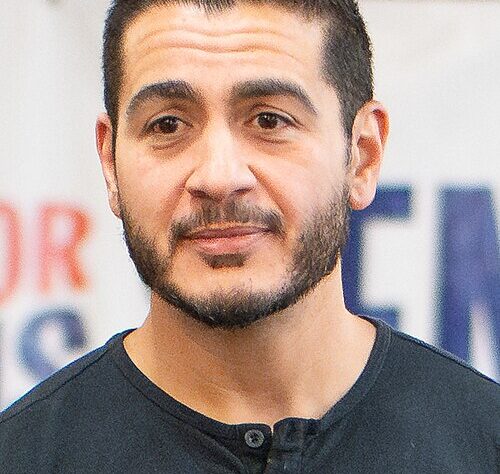
Mike Rogers and Abdul El-Sayed met Thursday night in Grand Rapids for the first debate of the Michigan Senate race, an hour on a television set that ran past the break. The moderator, Rick Albin, said he would like to be part of the debate too, and said he had not seen two candidates keep arguing through a commercial in thirty years of doing this. The seat is open because Gary Peters is retiring. Rogers lost the last one, two years ago, by fewer than 20,000 votes. El-Sayed won his primary by less than a point. Election Day is November 3. What they did with the hour is the record.
Democrat Abdul El-Sayed and Republican Mike Rogers traded personal attacks and clashed over Israel, tariffs, and health care in an Oct. 8 debate for Michigan’s open U.S. Senate seat. https://t.co/bnB9gcLwfo
— Zeale News (@ZealeNews) October 9, 2026
Seven things that came out of it
1. The insults were the format. El-Sayed called Rogers weak, cowardly, a warmonger, a finger in the wind, and a sock puppet for the administration. Rogers called El-Sayed a glitchy chatbot, a manufactured candidate, a con, and a terrorist sympathizer, and said he will say anything to win. They talked over each other from the open. A debate that cannot get through a station break without a quarrel is a debate about which man the voter can stand in the room. Both of them volunteered for that test.
2. Rogers’s line was the price. “We can’t afford Abdul,” he said, and he said it more than once. The target was Medicare for All, which he tied to higher prices in Michigan and, later, to death panels. El-Sayed is a former Wayne County health director running on that plan and on abolishing the immigration enforcement agency. Rogers, seven terms in the House and a former Army officer, spent the hour trying to make the progressive list sound like a bill the state cannot pay. The line is built for a state that votes on the grocery total.
3. Both want the Iran war over. Only one blamed the man who is fighting it. Rogers said this would be the time to wrap it up. El-Sayed called it a stupid war, blamed the price of gasoline and the rise in costs on the war and on the tariffs, and said Iran’s closing of the Strait of Hormuz sits on the administration. He said Rogers has a line to the president who is keeping the war going and is not using it. Asked whether he would send weapons to Israel if it were attacked, El-Sayed said he does not want tax dollars subsidizing war abroad. Asked which is the more dangerous threat, Iran or Israel, he called the question ridiculous and said both have proved dangerous in their own way. That answer will travel farther than the agreement about ending the war.
4. Rogers moved on the trade war, and El-Sayed called it a weather vane. Rogers said the dispute with Canada needs a deal, and that he had spoken with the commerce secretary about getting it done. El-Sayed treated the shift as the pattern: Rogers will not stand up until his numbers drop. A Republican who spent the year beside the tariff policy, and who now wants it bargained away before November, handed his opponent the only charge that does not require a theory. The charge is the calendar.
5. Rogers went at the family, and one of the blows was wrong. He said El-Sayed had taken money from people who openly support Hamas, Hezbollah, and al-Qaeda. He brought up the Egyptian immigrant household and Islamic terrorist groups. On police cameras, he asked why the technology would bother El-Sayed, and offered that it might be because somebody in the family is on a terrorism watch list. El-Sayed told him to go ahead and say it, that he had been tiptoeing. Rogers said they should open the can of worms. El-Sayed asked if he was talking about his mother. He was raised by his father and stepmother. Rogers also said El-Sayed had refused to condemn a March attack on a synagogue in West Bloomfield. That claim is not right. A false charge about a synagogue, in a debate already running hot on identity, is the kind of miss the other side will replay.
6. The money fight was the houses and the donors. Rogers said El-Sayed is a millionaire with luxury property in Dubai, and tied him to the Senate Democratic leader, to George Soros, and to the Muslim Brotherhood, against El-Sayed’s claim that he takes no corporate money. El-Sayed answered with a house of his own accusation, a McMansion in Florida that he said Rogers took off the market because he expects to lose. The corporate-money pledge is the one El-Sayed has been living on. Rogers spent the hour trying to make the super PAC and the family donors the real treasury. Neither man left the stage poorer in real estate stories.
7. The race is the map, and the debate did not shrink it. Democrats need Michigan if they mean to take the Senate. Republicans need it if they mean to hold a seat they have not won in a generation. The two men on the stage are the progressive who beat the establishment pick by a fraction, and the former congressman who lost the last Senate race by a whisker and is back for the open chair. Nothing Thursday settled a poll. It settled the choice. One man says the state cannot afford the program, the war, or the open border. The other says the state cannot afford the war, the tariffs, or the man who will not break with them. They will be in the same room again only if somebody schedules it. Absentee ballots are already out. The commercial break is over.